GDA Housing Scheme vs Private Builders | Best Property in Ghaziabad
Posted By
Harnandipuram Ghaziabad
Date
May 08, 2026
Ghar Kharidna - Sabse Bada Financial Decision
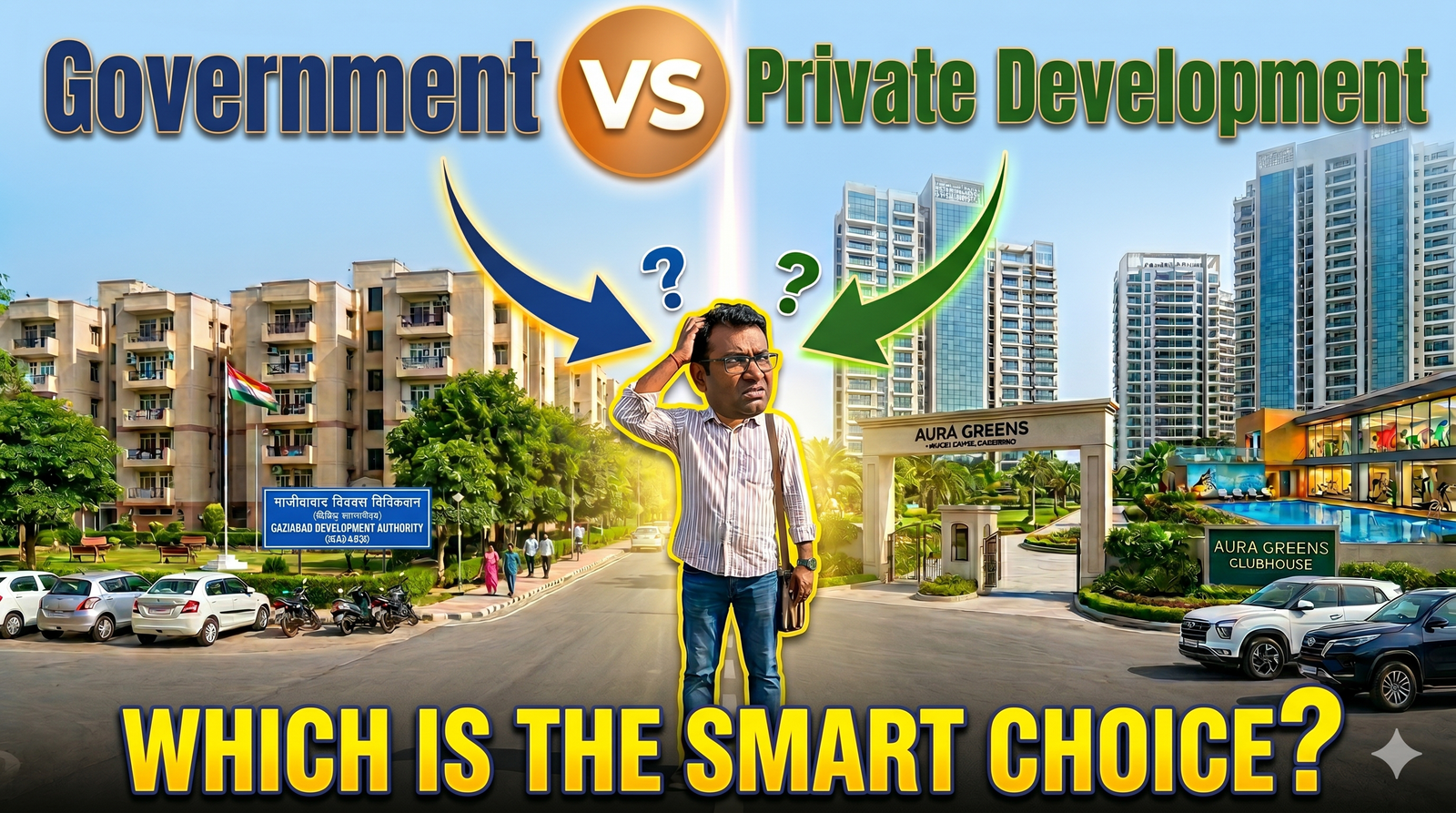
Ramesh ji, a 38-year-old school teacher from Vaishali, Ghaziabad, saved money for 12 years. Every month, ₹8,000 set aside. His dream? A 2BHK flat where his kids could grow up safely. Then came two options on the same day - a GDA housing scheme plot in Raj Nagar Extension, and a flashy private builder project in Crossings Republik with rooftop swimming pools and a clubhouse.
Ramesh ji did what most of us do - he got confused. And honestly? That confusion is valid.
GDA Housing Scheme vs Private Builder Projects is not just a comparison of bricks and cement. It is a comparison of your financial security, your peace of mind, and frankly, your family's future. Whether you are a first-time buyer or someone looking to invest in Ghaziabad's growing real estate market - this article breaks it all down for you, clearly and honestly.
GDA Kya Hai? Basics Samjhein Pehle
GDA stands for Ghaziabad Development Authority - the government body that plans and develops land, infrastructure, and housing in Ghaziabad, Uttar Pradesh. It comes under the state government and operates under the UP Development Authorities Act, 1973.
Simply put, GDA is to Ghaziabad what DDA is to Delhi or HUDA is to Haryana. It acquires land, develops it with basic civic infrastructure, and then offers it to citizens - usually through a lottery-based scheme or direct allotment.
GDA Housing Scheme Kaise Kaam Karta Hai?
When GDA launches a housing scheme, it announces plots, flats, or residential units at pre-fixed rates. These rates are typically lower than market prices because the government subsidises part of the cost. Buyers apply, and eligible candidates are selected through a transparent lottery system.
- Scheme announced with fixed application dates
- Applicants pay a registration amount (token money)
- Allotment done through draw of lots (lottery system)
- Successful applicants pay in instalments
- Possession and registry completed after full payment
The process is structured, documented, and legally accountable - unlike some private projects where half the terms are buried in 40-page agreements.
Private Builder Projects: Glitter Hai, Gold Bhi Hai?
Private builder projects have transformed Indian cities. From Prestige in Bangalore to Godrej in Mumbai to ATS and Gaurs in Ghaziabad - private developers bring design, amenities, and modern living to the table. And they do it well, mostly.
But here is the catch. The real estate sector in India has also seen some of the biggest consumer frauds - Amrapali Group in Noida/Greater Noida being perhaps the most infamous. Over 40,000 homebuyers were left stranded for years with no homes and no refunds. RERA (Real Estate Regulatory Authority) was introduced largely because of such disasters.
Private Projects Mein Kya Milta Hai?
- Premium amenities - gym, pool, landscaped gardens, power backup
- Better architectural design and modern layouts
- Gated security with CCTV and intercom
- Higher resale and rental potential in premium locations
- Ready-to-move options in many cases
So private projects are not bad by default - but they need careful scrutiny before you put your hard-earned money in.
GDA Housing Scheme vs Private Builder Projects: Seedha Comparison
Let us put both options side by side so you can see clearly what you are getting - and what you are risking.
| Feature | GDA Housing Scheme | Private Builder Project |
| Price | Budget-friendly, subsidised rates | Market rate, often premium |
| Legal Security | Government-backed, title clear | Depends on builder reputation |
| RERA Compliance | Mandatory, strictly followed | Varies, sometimes violations |
| Delay Risk | Possible, but accountable | High risk with fly-by-night builders |
| Amenities | Basic to moderate | Luxurious but pricey |
| Loan Eligibility | Easy bank approval | Depends on project approval |
| Resale Value | Steady, safe appreciation | High potential, higher risk |
| Target Buyer | Middle-income families | Premium/HNI buyers |
Cost Ka Sach: GDA Plots vs Private Plots
Money is where most decisions are made. So let us talk numbers in the context of Ghaziabad.
GDA Plots in Ghaziabad - Approximate Rates (2024)
- Raj Nagar Extension: ₹18,000 – ₹25,000 per sq. metre (GDA scheme rate)
- Indirapuram, Vaishali sectors: Older GDA plots resell at ₹35,000 – ₹60,000+ per sq. metre
- GDA flats (2BHK, ~900 sq. ft.): ₹28–42 lakh under scheme
Private Builder Projects in Ghaziabad - Approximate Rates (2024)
- Crossings Republik: ₹45–75 lakh for a 2BHK
- Raj Nagar Extension (private): ₹40–65 lakh
- Siddharth Vihar, Tronica City stretch: ₹30–50 lakh
The price difference can be anywhere between ₹10 lakh to ₹25 lakh for a comparable unit. Over a 20-year home loan, that translates to lakhs more in interest too. For a middle-class family, that gap is enormous.
Legal Safety: Sarkari vs Private - Kaun Zyada Surakshit?
This is where GDA wins - hands down, no debate.
GDA Approved Housing Scheme Ghaziabad - Legal Protections
- Land is acquired and cleared by the government - no disputed ownership
- Title deed (registry) is clean and government-issued
- No risk of land acquisition reversal or zoning disputes
- All layouts are approved as per Master Plan 2031
- Backed by government accountability - complaints can be escalated officially
Private Builder Project Risks - What Can Go Wrong
Before RERA 2016, buying from a private builder was almost like gambling. Even today, risks exist:
- Incomplete projects due to financial troubles or mismanagement
- Title disputes - builder may have mortgaged the land to a bank
- Layout deviations - fewer floors approved, more sold
- Missing OC (Occupancy Certificate) - you cannot legally stay without it
- Promised amenities never delivered
The Amrapali case, Unitech case, and several smaller Ghaziabad builder frauds are reminders that documentation matters more than brochures.
RERA Ki Baat Karen - 2016 Ke Baad Kya Badla?
RERA changed the game significantly. Under RERA, every builder must register their project, disclose all approvals, maintain an escrow account for buyer funds, and deliver on time or face penalties.
For GDA projects - RERA compliance is automatic since they operate under government frameworks. For private builder projects in Ghaziabad - always check UP RERA registration at: up-rera.in before paying even ₹1 as booking amount.
Pro Tip: If a builder says 'RERA registration is in process' - walk away. It should already be done before they take money from buyers.
Investment Return: Kaun Deta Hai Zyada Faayda?
Here is where private projects can genuinely win - if you choose wisely.
GDA Housing Scheme Advantages for Investment
- Safe, steady appreciation - 6–10% annually in well-developed GDA sectors
- Low entry cost means better ROI percentage
- Easy resale due to clear title and brand trust of GDA
- Better for long-term, risk-averse investors
Private Projects - Higher Returns, Higher Risk
- Well-located private projects near metro corridors can give 12–18% appreciation
- Premium amenities attract rental income from IT/MNC employees
- Under-construction projects offer lower entry price but carry completion risk
Ek aasaan rule: If you are buying for self-use and cannot afford delays or legal hassles - GDA is your safest bet. If you are an experienced investor with buffer funds and high risk appetite - a RERA-registered private project in a good location can give better returns.
Home Loan Mein Kya Farak Padta Hai?
Banks are far more comfortable lending for GDA-approved schemes versus unknown private builder projects. Here is why:
- GDA projects have clear title - zero legal risk for the bank
- All major banks (SBI, HDFC, Bank of Baroda) have pre-approved GDA schemes
- Documentation is simpler - allotment letter is enough to start the loan process
- For private projects, banks check RERA registration, building plan approval, NOC from authorities
A friend who works at a nationalised bank in Ghaziabad once told me: 'GDA allotment letter pe loan ek week mein ho jata hai. Private project mein pehle hamaari legal team 3 weeks document check karti hai.' That says it all.
Practical Tips: Property Kharidne Se Pehle Yeh Zaroor Karein
For GDA Scheme Buyers
- Track GDA Ghaziabad official website (gdaghaziabad.com) for new scheme announcements
- Keep documents ready - income certificate, identity proof, address proof
- Apply for multiple schemes if eligible - lottery gives better odds with more entries
- Verify the plot/flat number before final payment and registry
- Hire a local property lawyer for ₹5,000–₹10,000 to review your allotment letter
For Private Builder Project Buyers
- Always verify UP RERA registration at up-rera.in
- Check builder's track record - visit their completed projects physically
- Read the entire builder-buyer agreement - especially the penalty clauses
- Ensure OC (Occupancy Certificate) will be provided before possession
- Never pay more than 10% without a registered agreement to sell
- Avoid projects where land title is disputed or conversion is pending
Kaun Kya Choose Kare? Simple Decision Framework
GDA Housing Scheme is right for you if -
- You are buying your first home for self-use
- You want government-backed safety and clear documentation
- Your budget is ₹25–50 lakh and you cannot afford delays
- You prefer loan ease and hassle-free registry
- You are a salaried professional from middle-income background
Private Builder Project may suit you if -
- You are an experienced real estate investor
- You want modern amenities and premium lifestyle
- You have done thorough due diligence on the builder
- The project is RERA-registered and builder has a strong track record
- You can wait 2–3 years for possession without financial stress
Aakhri Baat - Apne Paison Ka Respect Karein
At the end of the day, there is no universal winner between GDA Housing Scheme vs Private Builder Projects. The right choice depends entirely on your financial situation, risk appetite, and purpose of purchase.
But if you ask most financial advisors who have seen Ghaziabad real estate up close - for a middle-class family buying their forever home, GDA is the safer, smarter, and more dignified choice. The government backing, legal clarity, and budget-friendly pricing make it hard to beat.
Private projects have their place - especially for investors who know how to read projects, check paperwork, and can absorb delays. But for the first-time buyer who has saved money through years of sacrifice - the peace of mind that comes with a GDA allotment letter is priceless.
Ramesh ji from our story? He applied to the GDA scheme in Raj Nagar Extension. Three months later, his name came in the lottery draw. Today, his family lives in a 2BHK they own - legally, clearly, and peacefully.
Your next step: Visit gdaghaziabad.com today, check for active schemes, and start your application. If investing in a private project, open up-rera.in first and verify before you trust any brochure.
Disclaimer: This content is for informational purposes only and does not constitute legal, financial, or real estate advice. Information may change over time. Please verify details from official sources and consult a professional before making any decisions. Use of this information is at your own risk.