Proposed Township Development: Master Plan, Golf Course and Planned Facilities Explained
Posted By
Harnandipuram Ghaziabad
Date
September 22, 2026
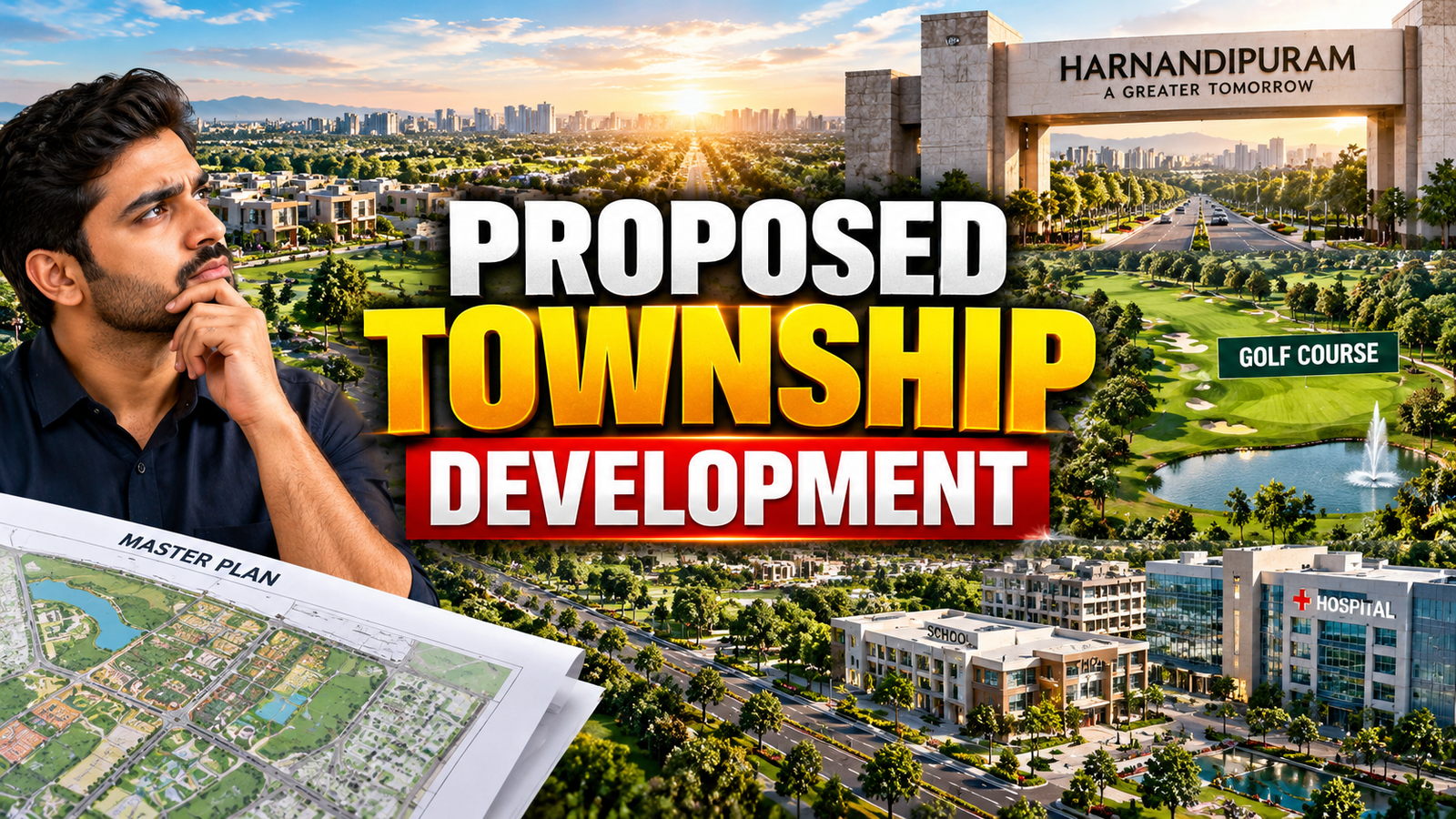
A proposed township development is drawing attention for its ambitious master plan, which includes a range of planned amenities designed to support long-term community living. Understanding what a township master plan actually promises, and distinguishing that from what has already been built, is essential for homebuyers, investors and residents evaluating such projects. This article explains the scope of the proposed development, the role of its planned golf course, and the other master-planned facilities that form part of the broader vision.
Township Overview
A township master plan typically outlines a phased, multi-year vision for residential, recreational and civic infrastructure. Rather than representing a single completed project, a master plan is a blueprint that guides development over time, subject to approvals, funding, construction timelines and regulatory processes.
For the township discussed here, the master plan envisages a mix of residential zones alongside recreational, educational and healthcare-oriented infrastructure. It is important for prospective buyers and residents to recognize that inclusion in a master plan does not equate to current availability. Many large-scale developments unfold over several years, with different facilities reaching completion at different stages.
Master Plan and Development Vision
The stated vision behind the township centers on creating a self-contained community that combines housing with lifestyle infrastructure. Master plans of this kind commonly emphasize:
- Integrated residential and recreational zoning
- Open green spaces designed for community wellbeing
- Long-term infrastructure planning, including schools and healthcare access
- Premium lifestyle features intended to differentiate the township from conventional residential projects
These elements are proposed as part of the overall development framework. Actual implementation depends on construction progress, regulatory clearances and developer execution, and timelines can shift as projects evolve.
Proposed Golf Course
Among the premium features included in the township's master planning is a proposed golf course. A golf course is proposed as part of the township's premium amenities, positioned to enhance the development's recreational and lifestyle appeal once implemented.
It is important to be clear that the golf course is currently a planned feature and not an operational facility. No information here should be read as confirming that the golf course has been constructed, opened, or made available for play. Details such as course size, number of holes, clubhouse design, designer, membership terms or operating company are not addressed in this article, since such specifics have not been independently verified.
Even at the planning stage, a golf course inclusion is significant for several reasons:
- Premium lifestyle positioning: A golf course is often used in township master plans to signal a higher-end lifestyle offering compared to standard residential projects.
- Recreation and leisure: If developed as planned, it would add a dedicated recreational space distinct from smaller parks or playgrounds.
- Green and open-space planning: Golf courses require substantial open land, which can contribute to the township's overall green cover when built.
- Community experience: Shared recreational infrastructure of this scale can, over time, become a focal point for community interaction.
- Future attractiveness: Master-planned premium amenities are often cited as factors that can influence long-term interest in a township, contingent on actual delivery.
Prospective buyers should treat the golf course, at this stage, as a planned amenity subject to future development rather than a present-day facility.
Planned Parks and Green Belts
The master plan also proposes parks and green belts as part of the township's open-space strategy. Green belts typically serve several planning purposes, including buffering residential zones, supporting local air quality, and providing walking or leisure spaces for residents.
As with other elements of the master plan, these parks and green belts should be understood as proposed infrastructure. Whether specific parks have already been developed within any completed phase of the project is a detail that would need to be confirmed through the developer's official updates or site visits, rather than assumed from master plan documentation alone.
Proposed Recreational Facilities
Beyond the golf course, the master plan envisages additional recreational facilities. These commonly include amenities such as sports courts, walking trails, community clubhouses or fitness spaces, depending on how a township's design evolves.
Recreational infrastructure of this kind is intended to support an active, community-oriented lifestyle. However, the specific scope, design and completion status of these recreational facilities should be verified directly with the developer, since master plan documents describe intent rather than guaranteed outcomes.
Planned Food Court and Community Facilities
A food court and broader community facilities are also part of the township's proposed infrastructure. Food courts within townships are generally designed to provide residents with convenient dining and social gathering options, reducing dependence on facilities outside the development.
Community facilities can include spaces such as function halls, community centers or gathering areas intended to support resident events and social activities. As with other amenities discussed in this article, these should be viewed as part of the master plan's proposed scope rather than services currently available to residents, unless confirmed otherwise through verified, up-to-date sources.
Proposed Schools and Healthcare Infrastructure
Educational and healthcare infrastructure often form a core part of township master planning, since access to schools and medical facilities significantly affects a location's livability.
The master plan for this township includes proposed schools and healthcare facilities intended to serve residents within or near the development. It is important to note that the presence of such facilities in a master plan does not confirm that schools are currently enrolling students or that healthcare centers are operational. Buyers and residents evaluating the township should independently confirm the operational status of any school or healthcare facility before making decisions based on assumed access.
Smart Infrastructure
Modern township developments increasingly incorporate smart infrastructure into their master plans. This can include elements such as digital utility management, security systems, or integrated infrastructure designed to improve efficiency and convenience for residents.
The township's master plan includes smart infrastructure as one of its proposed features. As with other components discussed above, the specific technologies, rollout timeline and current implementation status are not detailed here, since such specifics have not been independently verified.
Expected Lifestyle and Community Benefits
If implemented as envisaged, a township combining residential zones with recreational, educational and healthcare infrastructure could offer several potential benefits:
- Reduced dependence on external facilities for daily needs
- Greater access to green and recreational spaces within a planned community setting
- A more integrated lifestyle combining housing, leisure and essential services
- Potential long-term value associated with well-planned, amenity-rich developments
These benefits, however, depend entirely on the successful and timely execution of the master plan. Delays, phased rollouts, or changes in scope are common in large township projects and can affect when, or whether, specific facilities become available.
Development Considerations
Anyone evaluating a proposed township should keep a few practical considerations in mind:
- Verify current status: Confirm with the developer which facilities are completed, under construction, or still at the planning stage.
- Check regulatory approvals: Review relevant local development authority approvals and applicable real estate regulatory disclosures for the project.
- Understand phasing: Large townships are typically developed in phases, and amenities may be delivered at different times.
- Avoid assuming completion: Inclusion of a facility in a master plan is not the same as its physical completion or operational readiness.
Expert Perspective
From a real estate planning standpoint, master plans function as a long-term development framework rather than a fixed guarantee. Experienced buyers and analysts typically evaluate townships based on verified construction progress, regulatory filings and developer track record, rather than relying solely on the amenities listed in preliminary planning documents. This approach helps set realistic expectations about when premium features, such as a golf course or healthcare facilities, might actually become available.
Frequently Asked Questions
Is the golf course currently operational?
No. Based on available information, the golf course is a proposed feature within the township's master plan. There is no confirmation that it has been constructed or opened for use.
Is the golf course part of the township's master plan?
Yes. A golf course is included as one of the premium amenities proposed within the township's overall master planning.
What other facilities are proposed in the township?
The master plan includes proposed parks, green belts, recreational facilities, a food court, community facilities, schools, healthcare facilities and smart infrastructure, in addition to the golf course.
Are the proposed schools already operational?
This is not confirmed. Schools mentioned in a master plan may be planned for future phases, and their operational status should be verified directly with the developer or relevant education authorities.
Are healthcare facilities currently available within the township?
Availability of healthcare facilities should not be assumed from master plan documentation alone. Residents and prospective buyers should confirm current status through official, up-to-date sources.
What is the purpose of the planned green belts?
Green belts are generally intended to provide open, green buffer zones that support air quality, walking spaces and overall environmental planning within a township.
What smart infrastructure is proposed?
The master plan references smart infrastructure as a planned feature, though specific technologies and implementation timelines have not been independently detailed here.
Are the planned amenities guaranteed to be completed?
No. Master-planned amenities represent development intent. Actual completion depends on construction progress, approvals and the developer's execution timeline, and is not guaranteed by the master plan alone.
Conclusion
The proposed township's master plan outlines an ambitious vision that includes a golf course, parks, green belts, recreational facilities, a food court, community facilities, schools, healthcare infrastructure and smart infrastructure. Each of these represents a planned or proposed component of the development rather than a confirmed, completed amenity. Anyone considering this township, whether as a homebuyer or an investor, should treat master plan documentation as a guide to future intent and independently verify current construction status before forming expectations about available facilities.