GDA Phase 1 Layout Approval: RERA Registration Update - 10-11-2026
Posted By
Harnandipuram Ghaziabad
Date
November 10, 2026
Introduction
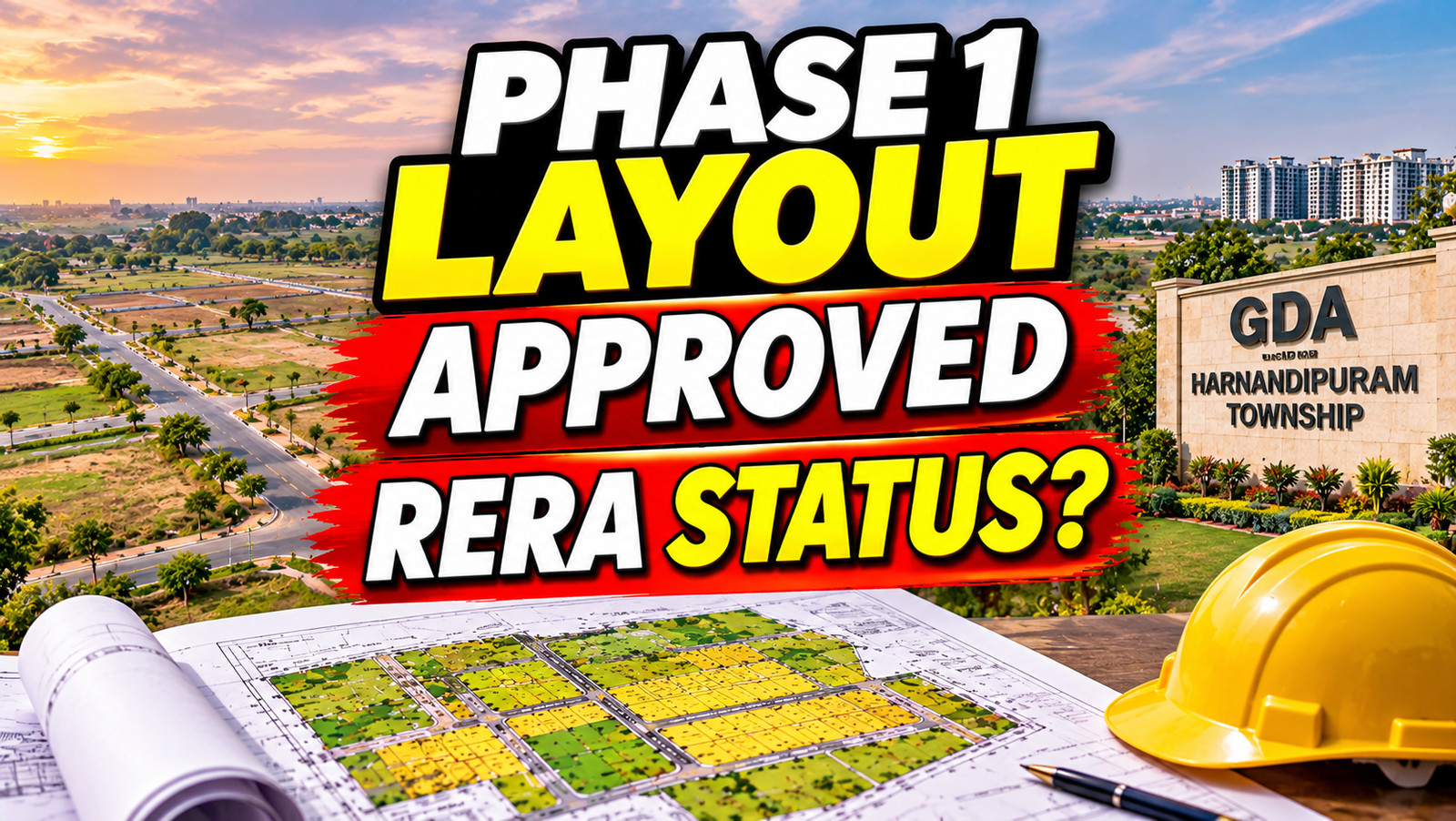
The Ghaziabad Development Authority (GDA) has approved the Phase 1 layout plan of its Harnandipuram township, covering 49.62 hectares of land. This is an important planning milestone for the proposed residential development. However, the project's regulatory process is not yet complete because its application for registration with the Uttar Pradesh Real Estate Regulatory Authority (UP RERA) remains under review.
The distinction between these two developments is important for prospective property buyers. GDA Phase 1 layout approval and RERA registration are separate regulatory milestones. While the board's approval establishes that the proposed Phase 1 layout has received the authority's planning-level approval, it does not automatically authorise the promoter to begin public marketing, accept bookings or make official allotments where registration under the Real Estate (Regulation and Development) Act, 2016, is mandatory.
The latest publicly available update identified for this article, published by Hindustan Times on October 30, 2026, reported that the RERA approval was still awaited and that the proposed launch depended on receiving it. The report also confirmed the 49.62-hectare Phase 1 area and the September 25 layout approval. Read the reported project update.
For buyers following the GDA project latest update, the present position is straightforward: the Phase 1 layout plan has been approved, the RERA registration application has been submitted, and the application remains under review. Prospective applicants should wait for official confirmation of registration before considering any booking or financial commitment.
GDA Board Approves the Phase 1 Layout Plan
The Ghaziabad Development Authority board has approved the layout plan for the first phase of the Harnandipuram township. The decision was reported following the board meeting held on September 25, 2026.
This approval represents an important step in the project's planning and regulatory progression. A layout plan provides the planning framework for how the proposed land parcel is intended to be organised and developed. It establishes the approved planning arrangement that will guide subsequent development activities, subject to applicable permissions and compliance requirements.
For a residential development, layout planning is particularly important because it provides the basis for considering land use, circulation, infrastructure arrangements and the proposed organisation of different areas. It also helps the relevant authority assess whether the proposed development follows the applicable planning framework.
However, prospective buyers should understand what this board decision does not establish. Approval of a layout plan does not necessarily mean that every statutory permission, infrastructure approval, development requirement or regulatory clearance has been completed.
It also does not mean that residential plots are immediately available for purchase. A separate RERA registration requirement may apply before the promoter can advertise, market, book, sell or offer the plots for sale.
Therefore, the GDA board approved layout plan should be viewed as a planning milestone rather than confirmation that the project is ready for public booking.
Why the layout approval matters
Board-level approval provides a formal planning decision on the submitted Phase 1 proposal. It allows the project to progress through the next applicable regulatory and administrative steps.
For prospective buyers, this development is relevant because it demonstrates progress beyond the preliminary planning stage. Nevertheless, the approved layout should be considered alongside the project's registration status, official disclosures and subsequent permissions.
Buyers should also distinguish between an authority approving its own development proposal and the separate statutory obligations that apply under RERA. Both processes serve different purposes and should not be treated as interchangeable.
Understanding the 49.62-Hectare Phase 1 Development
The approved Phase 1 layout covers 49.62 hectares. In more familiar measurement terms, this is approximately 122.6 acres.
For readers unfamiliar with land measurements, one hectare equals approximately 2.471 acres. Multiplying 49.62 hectares by this conversion factor gives a land coverage of roughly 122.6 acres.
This provides a practical understanding of the proposed development's physical scale. A land parcel of this size can accommodate a planned development with different land-use requirements, depending on the approved layout and applicable planning standards.
However, the total land coverage should not be confused with the area available for individual residential plots or saleable property.
Total land area versus developable area
In planned residential developments, the total project area and the net developable area can differ considerably.
The overall land parcel may include areas designated for infrastructure, circulation, public facilities, open spaces and other planning requirements. Consequently, the area available for individual plots or other saleable components may be smaller than the total approved land coverage.
For example, a development covering 100 hectares does not necessarily offer 100 hectares of residential plots. Some land may be allocated to roads, public infrastructure, green spaces or other permitted uses.
The same principle applies to the 49.62-hectare GDA Phase 1 development. The total approved area alone cannot establish the number of plots, their dimensions, the final saleable area or the proposed development density.
Buyers should obtain the official approved layout and project disclosures when they become available. These documents are more useful than assumptions based on the overall land measurement.
What the land-area approval establishes
The 49.62-hectare figure identifies the reported geographical coverage of Phase 1. It helps readers understand the scale of the approved planning proposal.
It does not independently establish:
- The final number of residential plots.
- The dimensions or prices of individual plots.
- The final distribution of residential and other land uses.
- The completion status of infrastructure.
- The availability of particular facilities or amenities.
- The date on which the project will open for public applications.
These details should be confirmed through official GDA documents and the registered project disclosures rather than assumed from the land coverage figure.
Current UP RERA Registration Status
The UP RERA registration application for the GDA Phase 1 project has been filed and remains under review. Registration has not been confirmed in the latest public update identified for this article.
This is the most important regulatory distinction for prospective buyers. An application being submitted is not the same as registration being granted.
The registration process involves scrutiny by the regulatory authority. The application and accompanying documents must satisfy the applicable requirements before the authority grants registration.
According to the October 30, 2026, Hindustan Times report, GDA officials confirmed that the required RERA approval was still awaited. The proposed launch was therefore dependent on receiving the regulatory approval.
Understanding the different stages of RERA registration
There are four important stages buyers should understand when checking the UP RERA registration status of a property development.
1. Application submitted: The promoter has filed the registration application with the regulatory authority. This indicates that the registration process has been initiated, but it does not establish that the application has been accepted or approved.
2. Application under review: The regulatory authority is examining the submitted application and relevant documents. Additional information or clarification may be required, depending on the scrutiny process.
3. Registration granted: The authority has approved the application and granted registration in accordance with the applicable provisions of the Act and rules.
4. Registration number issued: The registered project receives an identifiable registration number and corresponding official project record. Buyers can use this information to locate the project and examine its disclosures.
The GDA Phase 1 project should currently be described as having an application under review, not as a RERA-registered or RERA-approved project.
Why an application under review is not final approval
Submitting an application is an administrative step, not a guarantee of a favourable decision.
The UP RERA registration process requires the promoter to provide prescribed information and documents. These can include details concerning the promoter, project land, approvals, proposed development and other disclosures required under the Act, rules and applicable regulations.
The authority examines the application before deciding whether registration can be granted. If clarification or additional documentation is required, the promoter may need to respond before the process progresses.
Consequently, prospective buyers should not interpret an application reference, submission acknowledgement or statement that registration is being processed as permission to begin booking.
The appropriate confirmation is the actual registration record available through the official UP RERA portal.
Why UP RERA Registration Is Important
The Real Estate (Regulation and Development) Act, 2016, commonly known as the RERA Act, was introduced to improve transparency, accountability and consumer protection in the real estate sector.
It establishes a regulatory framework for covered real estate projects and provides obligations for promoters, real estate agents and other relevant stakeholders.
In Uttar Pradesh, the regulatory authority responsible for administering the applicable state-level framework is UP RERA.
The legislation is particularly important for buyers because it establishes requirements concerning project registration, disclosures, promoter responsibilities and regulatory oversight.
Understanding Section 3 of the RERA Act
Section 3(1) of the RERA Act establishes the requirement for prior registration of covered real estate projects.
It provides that a promoter cannot advertise, market, book, sell, offer for sale or invite persons to purchase a plot, apartment or building in a real estate project or part of it within a planning area without registering the project with the Real Estate Regulatory Authority, subject to the applicable statutory provisions.
This provision is directly relevant to the GDA Phase 1 project because the proposed development includes land intended for real estate purposes.
Where the project falls within Section 3 and no exemption applies, the promoter must obtain the required registration before undertaking activities covered by the provision.
Are there exemptions from RERA registration?
Section 3(2) provides specific circumstances in which registration is not required.
These include projects where the proposed land area does not exceed 500 square metres or the number of apartments does not exceed eight, inclusive of all phases, subject to the applicable provisions and any reduction of these thresholds by the appropriate government.
Other statutory exemptions concern projects for which the completion certificate was received before the commencement of the Act and certain renovation, repair or redevelopment activities that do not involve marketing, advertising, selling or new allotment.
These exemptions must be considered according to the actual structure and legal circumstances of a project. They should not be assumed merely because a development is being undertaken by a public development authority.
For a project covering 49.62 hectares, the applicable registration position must be determined from the project's actual legal structure, statutory provisions and regulatory record.
How RERA registration supports property buyers
Registration is not simply an administrative formality. It forms part of a broader system intended to improve the quality and accessibility of project information.
For a registered project, the regulatory framework requires prescribed disclosures and imposes obligations on the promoter.
These requirements help buyers examine relevant information before making decisions. They also provide a regulatory framework through which applicable complaints and disputes can be addressed.
However, registration should not be interpreted as a guarantee of investment returns, appreciation in property value or the absence of every possible development risk.
Buyers must still examine land-related documents, project disclosures, applicable approvals, payment terms and contractual conditions before committing funds.
Official legal references are available through the UP RERA website and the official text of the RERA Act.
Difference Between GDA Layout Approval and UP RERA Registration
Although both approvals are important, they perform different regulatory functions. Understanding this distinction helps buyers avoid confusion when following the GDA Phase 1 project approval process.
| Comparison | GDA Layout Approval | UP RERA Registration |
|---|---|---|
| Responsible authority | Ghaziabad Development Authority board | Uttar Pradesh Real Estate Regulatory Authority |
| Primary purpose | Approval of the proposed development layout | Registration of a covered real estate project |
| Regulatory significance | Planning-level approval | Compliance with the RERA registration framework |
| What it establishes | The Phase 1 layout has received board approval | The project has been registered under the applicable law |
| What remains necessary | Other applicable permissions and statutory compliance | Continuing compliance and fulfilment of promoter obligations |
| Buyer implications | Confirms planning progress, not booking eligibility | Provides the required registration for covered marketing and sale activities |
The main takeaway is that GDA layout plan approval cannot replace mandatory UP RERA registration.
A project may have received planning approval but still be awaiting registration. Similarly, registration does not automatically establish that every development activity has been completed or that all other applicable permissions are in place.
Both regulatory requirements must be considered independently.
Can Public Booking or Official Allotment Start Before RERA Registration?
No, where Section 3 applies and no statutory exemption is available, the promoter cannot begin public advertising, marketing, booking, sale or offers for sale before obtaining the required RERA registration.
This is an important point for anyone interested in the upcoming GDA Phase 1 development.
Section 3(1) of the RERA Act specifically restricts a promoter from advertising, marketing, booking, selling, offering for sale or inviting persons to purchase plots, apartments or buildings in a covered project without prior registration.
The provision applies to different forms of property transactions and is not limited to signing a final sale agreement.
Why submitting the RERA application is not sufficient
The registration application and the registration itself are two different stages.
When a promoter submits an application, it only means that the process has started. It does not mean that the regulatory authority has approved the project or issued its registration number.
Therefore, the GDA Phase 1 RERA application being under review cannot be treated as permission to accept public bookings where registration is legally required.
Similarly, a verbal statement that registration is expected shortly does not replace the formal decision of UP RERA.
What activities are restricted before registration?
For a covered project, the statutory restriction includes:
- Advertising the property for sale.
- Marketing residential plots or other covered units.
- Accepting bookings from prospective purchasers.
- Offering covered plots or properties for sale.
- Inviting members of the public to purchase through promotional or other means.
The restriction should be understood according to the statutory definition and actual nature of the activity. It is not limited to activities described formally as bookings.
Does RERA prevent all development work?
No. The distinction between physical development activity and marketing restrictions is important.
Section 3 primarily regulates activities such as advertising, marketing, booking and selling covered real estate projects before registration. It should not be interpreted as a blanket prohibition on every form of preparatory or physical development work.
However, any development activity must independently comply with applicable planning permissions, land-related requirements, environmental conditions and other relevant legal provisions.
Accordingly, the GDA project may progress through legally permissible administrative or development activities while its registration application is being examined. This does not remove the requirement for registration before covered public sales activities begin.
What Prospective Buyers Should Know Before Considering GDA Phase 1
The layout approval is an encouraging planning development, but buyers should approach the project with a verification-first mindset.
Interest in a new residential development can increase when an authority announces progress. However, early interest should not replace proper document verification.
1. Check the official UP RERA registration number
Once registration is granted, buyers should obtain the project's actual registration number.
They should verify that number directly through the official UP RERA website rather than relying exclusively on a screenshot, forwarded message or promotional communication.
The registration record should correspond to the exact project and phase being considered.
2. Verify the registered project details
Buyers should examine the information available in the official project record. Important details may include the registered promoter, project name, approved project area, land-related information, declared completion period and other prescribed disclosures.
It is particularly important to ensure that the registration relates to Phase 1 rather than another phase or a similarly named development.
3. Avoid unofficial booking offers
Prospective applicants should be cautious about individuals or intermediaries claiming to offer priority booking, guaranteed allotment or preferential plot selection before the required registration and official scheme announcement.
Do not transfer money merely because someone claims to have access to an early application facility.
Any payment arrangement should be supported by genuine official documentation and a legally compliant process.
4. Do not rely on verbal promises
Statements concerning plot sizes, prices, allotment dates, development schedules and facilities should be checked against official documents.
A property consultant's statement or an informal communication does not necessarily represent the final terms of a government authority scheme.
Wait for the official brochure, applicable terms and conditions, and the relevant project disclosures before making financial decisions.
5. Understand expressions of interest and official bookings
An expression of interest is not automatically equivalent to a legally valid property booking.
However, the actual nature of the arrangement matters. If a communication invites a person to purchase a property or involves an advance or deposit for that purpose, it may fall within the relevant statutory restrictions.
Buyers should not assume that describing a payment as a registration fee, priority amount or expression-of-interest deposit automatically makes the arrangement legally permissible.
6. Check the official GDA announcements
Important information about the development should be verified through the official Ghaziabad Development Authority website.
Look for the official scheme notification, application instructions, brochure, allotment conditions and other relevant announcements.
For a government development scheme, the authority's published documents should take priority over unverified third-party promotional material.
7. Consult a qualified property lawyer
Before making a significant financial commitment, buyers should consider obtaining independent legal advice.
A qualified property lawyer can help examine the relevant land documents, registration record, applicable approvals, contractual conditions and any potential legal concerns.
This is especially useful for first-time buyers who may not be familiar with the difference between planning approval, project registration and final allotment documentation.
What Are the Next Expected Project Milestones?
Following the GDA board's layout approval and submission of the RERA registration application, the project has several possible regulatory and administrative steps ahead.
These are expected procedural stages rather than confirmed dates or guaranteed outcomes.
1. Review of the submitted UP RERA application
The regulatory authority examines the application and the documents submitted by the promoter. This stage determines whether the information satisfies the applicable registration requirements.
2. Clarifications or additional documentation, if required
If the authority identifies missing information or requires further clarification, the promoter may need to provide additional documents or responses.
The nature and extent of such requirements depend on the application and the authority's scrutiny.
3. Regulatory decision on the application
After examining the relevant information, UP RERA proceeds according to the applicable statutory registration process.
The outcome cannot be assumed in advance. An application under review does not guarantee approval.
4. Grant of registration and issuance of the registration number
If the application satisfies the requirements and registration is granted, the project receives its official registration record and number.
Buyers should verify this information through the regulator rather than relying on an announcement alone.
5. Verification of official project disclosures
After registration, prospective applicants should review the registered project information and other relevant documents.
This step helps buyers understand the project's declared details and the applicable terms before deciding whether to participate.
6. Legally compliant marketing, booking and allotment announcements
Once the necessary registration is granted, the promoter may proceed with activities permitted under the applicable law and scheme conditions.
Any public application or allotment process should follow the official terms, eligibility requirements, payment instructions and other applicable conditions.
No confirmed registration date, launch date or allotment schedule should be assumed until GDA publishes the relevant information.
Frequently Asked Questions
1. Has GDA approved the Phase 1 layout plan?
Yes. The Ghaziabad Development Authority board approved the Phase 1 layout plan of the Harnandipuram township on September 25, 2026, according to the reported project update.
2. How much land does Phase 1 cover?
Phase 1 covers 49.62 hectares, equivalent to approximately 122.6 acres. This represents the reported total area of the approved Phase 1 layout, not necessarily its net saleable area.
3. Has the project received UP RERA registration?
The registration application has been submitted and remains under review according to the latest publicly available update identified for this article. Registration should not be considered granted until confirmed through the official UP RERA record.
4. Can buyers book plots before UP RERA registration?
Where Section 3 applies and no statutory exemption is available, public booking, marketing and offers for sale cannot legally begin before the required registration is granted.
5. What is the difference between GDA layout approval and RERA registration?
GDA layout approval concerns the planning arrangement of the proposed development. RERA registration is a separate statutory requirement governing covered real estate projects and their marketing and sale activities.
6. What does an application under review mean?
It means the promoter has submitted the registration application and the regulatory authority is examining it. The application may require further information before a decision is made. It does not mean registration has been granted.
7. How can buyers check a project's UP RERA registration number?
Visit the official UP RERA portal and use its project search facilities to locate the relevant registration record. Check that the project name, promoter and phase match the development being considered.
8. What should buyers verify before investing?
Buyers should verify the official registration number, project disclosures, land-related documents, applicable approvals, scheme brochure, payment conditions and allotment terms. Independent legal advice is advisable before making a substantial financial commitment.
Conclusion
The GDA Phase 1 layout approval and RERA registration developments represent two separate stages in the progress of the Harnandipuram township.
The GDA board has approved the Phase 1 layout covering 49.62 hectares, approximately 122.6 acres. This is an important planning milestone for the proposed development.
However, the UP RERA registration application has been filed and remains under review. The application should not be confused with granted registration, and the project should not be described as RERA-registered until the regulatory authority officially confirms it.
Where the RERA Act applies and no statutory exemption is available, public advertising, marketing, booking, offers for sale and official allotment activities must await the required registration.
For prospective buyers, the most sensible approach is to monitor official GDA announcements, verify the registration record through UP RERA and examine the relevant project documents before committing any money.
The layout approval establishes planning progress. The next important regulatory milestone is confirmation of the required UP RERA registration. Buyers should make decisions based on these verified milestones rather than launch expectations or unofficial promises.