First Phase Residential Plots: Approximately 2,000 Plots Planned Under GDA-Approved Scheme
Posted By
Harnandipuram Ghaziabad
Date
September 13, 2026
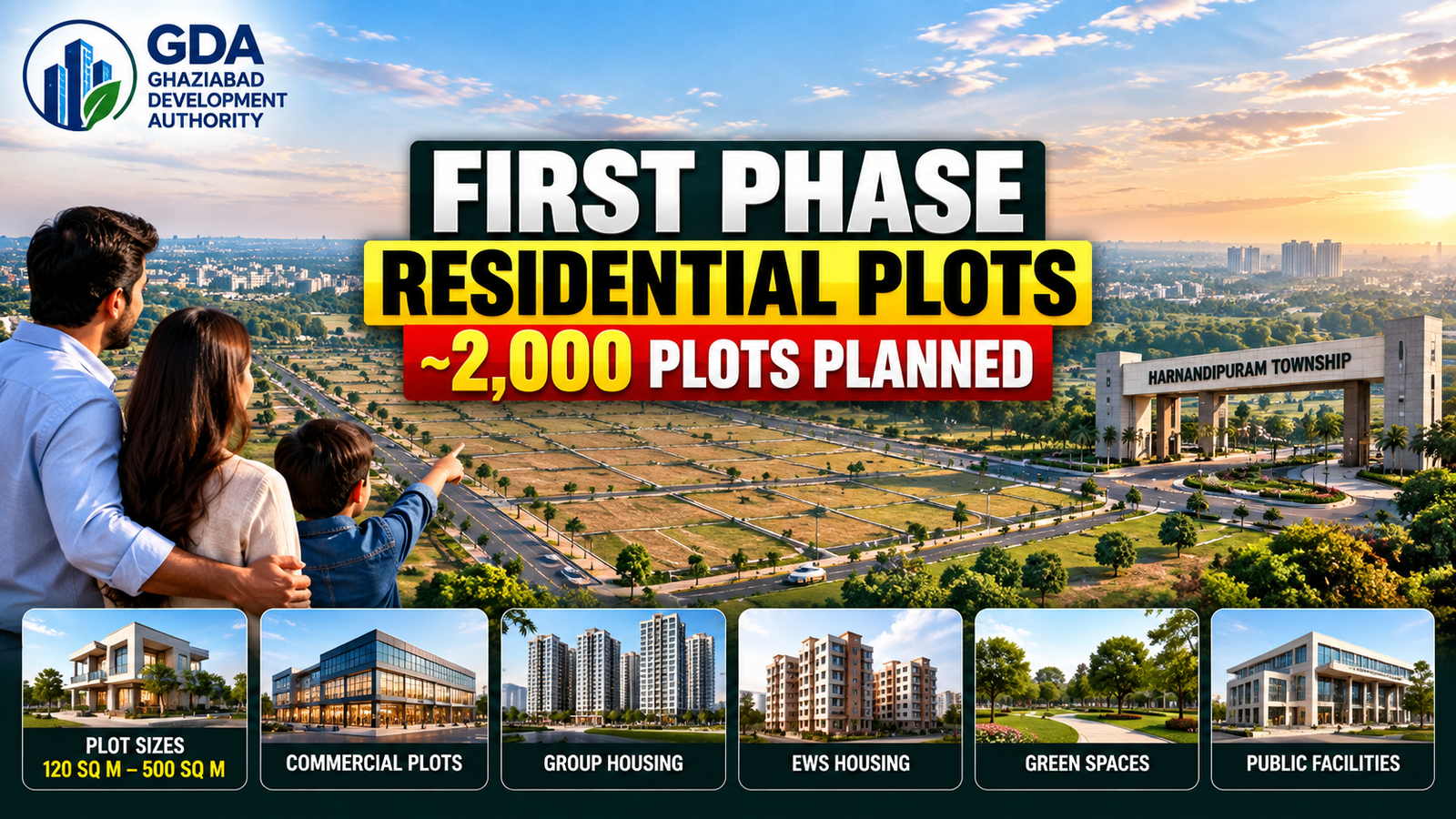
If you are researching first phase residential plots under the recently approved development scheme, you have probably come across reports mentioning approximately 2,000 residential plots. This figure has generated a lot of interest among prospective plot buyers, investors and residents who track land development in the area. But what does this number really mean, and how reliable is it? This article breaks down what has been reported after GDA Board approval, the plot sizes under discussion, and the other components planned for the first phase, while being clear about what is confirmed and what is still provisional.
Table of Contents
First Phase: Approximately 2,000 Residential Plots Planned
According to August reporting that followed GDA Board approval, the first phase could include approximately 2,000 residential plots. This is currently the most widely cited figure in connection with the scheme, and it gives an early sense of scale for anyone tracking this residential plot scheme.
It is worth pausing on the wording here. Around 2,000 residential plots are planned, not confirmed as allotted or available for purchase. Planning approval is an important administrative milestone, but it is only one step in a longer process that typically includes detailed layout finalisation, infrastructure development, pricing decisions, and a formal application or allotment process announced separately by the development authority.
For readers who are new to how plotted development projects usually work, a planning authority first approves a broad layout and land-use plan. Only after this stage do authorities work out finer details such as block-wise plot numbers, exact dimensions, service roads, and utility networks. This is why the approximately 2,000 figure should be treated as an early planning estimate rather than a fixed inventory count.
What Plot Sizes Are Reportedly Planned?
Reported plot sizes for the first phase range from approximately 120 sq m to 500 sq m. This is a fairly wide band, which suggests the scheme is designed to accommodate different categories of buyers, from smaller households looking for a compact residential plot to larger buyers interested in bigger footprints for independent housing.
A wide plot-size range is common in large residential plot schemes because it allows the development authority to plan for a mixed community rather than a single uniform plot type. Smaller plots in the 120 sq m range are generally suited to nuclear families or first-time plot buyers, while plots closer to 500 sq m may appeal to those planning larger homes or long-term family residences.
| First-phase component | What is planned |
|---|---|
| Residential plots | Approximately 2,000 planned |
| Plot size range | Approximately 120 sq m to 500 sq m |
| Other development | Commercial plots, group housing, EWS housing, green spaces and public facilities |
Keep in mind that a reported range does not mean every plot size within that range will be equally available, nor does it mean the distribution across sizes has been finalised. Exact plot-wise breakup, if and when released, would typically come through an official layout plan or brochure published by the development authority.
What Else Is Included in the First Phase?
Residential plots are only one part of the first-phase plan. Based on the reported scope of the project, the first phase is also planned to include commercial plots, group housing, EWS housing, green and open spaces, and public or semi-public facilities. Together, these components indicate an attempt to build a more complete, self-sufficient residential neighbourhood rather than a plots-only layout.
Commercial Plots
Commercial plots are generally planned alongside residential sectors to support day-to-day retail, local business and neighbourhood-level commercial activity. In most urban development schemes, commercial plots are placed at strategic points, such as near entry roads or central locations, so that residents have convenient access to shops and services without having to travel far.
Group Housing
Group housing typically refers to land earmarked for multi-storey apartment or flat development, as opposed to individual plotted housing. Including group housing sites within a phase usually signals that the development authority expects a mix of housing formats, catering to buyers who prefer apartments over independent plots.
EWS Housing
EWS stands for Economically Weaker Sections. Reserving land for EWS housing is a common regulatory requirement in Indian urban development schemes, intended to ensure that affordable housing options are built into new residential areas rather than treated as an afterthought. This is a routine and expected component of most authority-led plotted development schemes.
Green and Open Spaces
Green and open spaces are planned for parks, landscaped areas and open recreational zones. These spaces play a functional role in urban planning, helping manage stormwater, improving air quality, and giving residents accessible outdoor areas within the neighbourhood.
Public and Semi-Public Facilities
Public and semi-public facilities generally cover land reserved for community needs such as schools, health centres, community halls or similar civic infrastructure. Their inclusion at the planning stage is meant to ensure that essential services are available within or near the residential area as it develops, rather than being added years later.
What Does GDA Board Approval Mean?
GDA Board approval refers to the formal sign-off given by the development authority's governing board to a proposed plan. In practical terms, this approval authorises the authority to move forward with the next stages of planning, such as detailed survey work, infrastructure design, and eventual notification of the scheme.
It is important to understand what board approval does not do. Approval of a plan is not the same as physical construction being complete, nor does it mean plots are ready for allotment or sale. Many planned residential plots, at this stage, exist only on paper as part of an approved layout. The gap between an approved plan and actual plot availability can involve several administrative and infrastructural steps, and timelines for these can vary considerably depending on land acquisition status, funding, and construction progress.
For readers evaluating this residential plot scheme, board approval is best understood as a green light for the project to proceed through planning, not as a guarantee of when or how plots will become available.
Are the 2,000 Plots a Final Allotment Number?
No. Unless a reliable, authoritative source explicitly confirms a final allotment figure, the approximately 2,000 residential plots should not be treated as a fixed or guaranteed allotment number. This distinction matters a great deal for anyone making financial or housing decisions based on this reporting.
Planned figures at the board-approval stage are working estimates based on the layout being considered. As detailed planning progresses, actual numbers can change due to factors such as final land measurement, infrastructure requirements, reservation of land for other uses like green spaces or public facilities, and adjustments made during detailed engineering surveys. It would be inaccurate to say that 2,000 plots will be allotted, or that exactly 2,000 plots are confirmed, based on current reporting alone.
A more accurate way to describe the current situation is that around 2,000 residential plots are planned in the first phase, and that the definitive count, along with information on future allotment, applications, pricing and eligibility, would need to come from an official notification issued later by the development authority.
What Prospective Buyers Should Check
Given that this project is still moving through planning stages, prospective buyers and investors should approach available information carefully. Here are practical points worth verifying before making any decisions related to this first phase residential plot scheme:
- Confirm whether the development authority has issued any official notification beyond board approval of the plan.
- Check for a formal allotment or application process before assuming plots are available for purchase.
- Verify actual plot sizes, layout numbers and block details once an official layout map or brochure is released.
- Look for official pricing information rather than relying on estimates or unofficial sources.
- Review eligibility criteria, if any, once the authority publishes them.
- Track the project only through the development authority's official website or verified public notices, and treat news reports as preliminary updates rather than final confirmations.
- Be cautious of third parties offering to "book" or "reserve" plots before any official allotment process has been announced.
Being methodical about verification is especially important in the early stages of a residential development, when reported planning figures can shift as the project moves from board approval to execution.
Frequently Asked Questions
How many residential plots are planned in the first phase?
Approximately 2,000 residential plots are planned in the first phase, according to reporting that followed GDA Board approval. This is a planning-stage estimate, not a confirmed allotment number.
What plot sizes are reportedly planned for the first phase?
Reported plot sizes range from approximately 120 sq m to 500 sq m, indicating that the scheme is designed to offer a range of plot options for different types of buyers.
Are the approximately 2,000 plots confirmed for allotment?
No. The approximately 2,000 figure reflects planned plots at the board-approval stage. It should not be treated as a final or guaranteed allotment number unless a later official notification confirms it.
What other developments are included in the first phase besides residential plots?
The first phase is also planned to include commercial plots, group housing, EWS housing, green and open spaces, and public or semi-public facilities, in addition to residential plots.
Does GDA Board approval mean the plots are immediately available for purchase?
No. Board approval authorises the authority to proceed with further planning and development work. It does not by itself mean plots are ready for allotment, application or sale.
When will official plot allotment details be released?
There is no confirmed timeline for allotment based on current reporting. Prospective buyers should watch for a separate, official announcement from the development authority regarding applications, pricing and eligibility.
What should buyers verify before relying on the reported 2,000-plot figure?
Buyers should verify whether an official notification or allotment process has been announced, confirm final plot sizes and layout details once released, and rely only on the development authority's official communications rather than early news estimates.
Why does the plot-size range vary so widely, from 120 sq m to 500 sq m?
A wide plot-size range is typical in large plotted development schemes, as it allows the authority to plan for different buyer needs, from compact plots for smaller households to larger plots for bigger homes.
Conclusion
The reported approval marks an early but meaningful step for this first phase residential plot scheme. Approximately 2,000 residential plots are planned, with reported sizes ranging from about 120 sq m to 500 sq m, alongside commercial plots, group housing, EWS housing, green spaces and public facilities. What this reporting does not confirm is a final allotment number, a pricing structure, or an application process. Readers who are genuinely interested in this development should treat the current figures as planning estimates and wait for official communication from the development authority before making any decisions tied to plot booking, pricing or eligibility. Following the authority's official updates remains the most reliable way to track how this project develops from an approved plan into an actual, allottable residential scheme.